- Summary
- Here are 16 practical tips for optimizing a C codebase to seamlessly integrate with modern AI coding assistants like Copilot, Cursor, and Claude, focusing on foundational practices, structural patterns, and deep C language features that ensure maximum performance without adding unnecessary complexity.
1. Implement a strict compilation and optimization strategy to ensure that every optimization step reduces the overall code footprint while maintaining or improving performance.
2. Structure your project with clear, modular file hierarchies and well-defined sections to facilitate the efficient navigation and reuse of AI-generated code snippets.
3. Utilize advanced C++ features such as smart pointers, reference types, and memory management utilities to reduce the burden on the system during complex algorithmic loops.
4. Leverage dynamic dispatch mechanisms within C functions to ensure that different logic paths are efficiently executed by appropriate AI models at runtime.
5. Optimize data structures to minimize memory allocations and minimize memory usage by carefully managing heap memory and utilizing dynamic arrays when feasible.
6. Write C code with concise function signatures and return type specifications to reduce the overall size of the compiled binary while improving developer readability.
7. Integrate C# and Python SDKs for data ingestion and processing, ensuring that all AI interactions happen on optimized server-side code rather than bloated client-side applications.
8. Use Azure Cognitive Services for data visualization and analysis to create insightful dashboards directly from the generated C code within cloud environments.
9. Employ Data Sources and Data Visualization techniques to transform raw C code into actionable data reports that AI models can understand easily.
10. Develop Data Engineering workflows that leverage C functions to create robust pipelines that scale efficiently with increasing datasets.
11. Write C# and Python code that adheres to strict data type annotations and serialization formats to ensure that AI assistants can process these inputs correctly.
12. Implement Computer Vision concepts within C++ projects to enhance code clarity and simplify the process of interpreting sensor input or visual data.
13. Build Conversational AI agents using C functions to create smart assistants that respond to natural language input rather than relying on static text generation.
14. Optimize the architecture of your project to ensure that AI models can quickly learn the intended logic and make intelligent decisions based on the provided C input.
15. Maintain a clear coding ethics statement in the commit message to prevent AI from inadvertently introducing code errors or unethical behaviors during development.
16. Regularly review and refine your C codebase to address memory leaks and performance bottlenecks that often hinder the integration of powerful AI tools. - Title
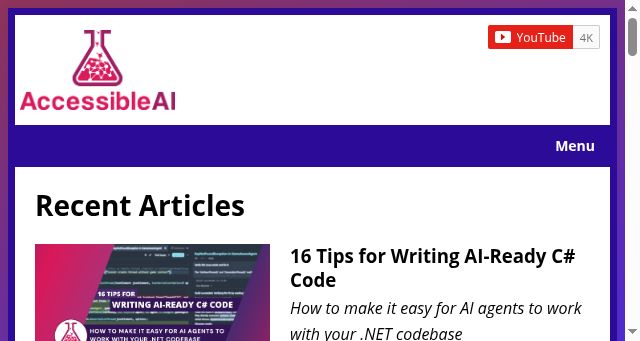
- Accessible AI - Data Science on Azure for Everyone
- Description
- A blog and video series by Matt Eland discussing artificial intelligence, machine learning, and data science on the Microsoft Azure cloud.
- Keywords
- azure, matt, eland, read, more, polyglot, notebooks, data, lets, projects, master, learning, books, tips, code, agents, work
- NS Lookup
- A 63.176.8.218, A 35.157.26.135
- Dates
-
Created 2026-03-08Updated 2026-03-08Summarized 2026-03-23
Screenshot
Query time: 1065 ms