- Summary
- To design a rocket safely, you must follow specific development guidelines and utilize advanced industry tools effectively. The first step in rocket development is to analyze the rocket's structure to determine the optimal launch parameters and mass distributions. By calculating flight trajectories and considering aerodynamic forces, engineers can ensure the design withstands high-speed impacts and environmental stresses during the launch sequence. When creating the core structural frame, it is crucial to select material properties that minimize internal stress and allow for flexible bending without breaking under load. Additionally, proper layout ensures that the mass is concentrated where it generates the most force during ascent. Furthermore, applying these calculated designs to a simulation tool like 3DEXPERIENCE allows for instant feedback on structural integrity and stability before physical assembly begins. Utilizing the SOLIDWORKS Toolbox effectively enables you to manipulate these 3D models for easier integration and verification. Once the base structure is solidified, the next critical phase is refining the internal components to balance rigidity and weight while maintaining structural soundness. By employing the provided tools, developers can verify that each part conforms to safety standards without compromising the overall rigidity of the launch vehicle. This systematic approach ensures that complex design challenges in aerospace engineering are resolved with precision and reliability.
- Title
- Home - Engineers Rule
- Description
- Home - Engineers Rule
- Keywords
- resources, design, simulation, october, engineering, engineers, december, november, understanding, jacob, platform, concept, need, know, september, spaces, august
- NS Lookup
- A 104.21.86.252, A 172.67.138.221
- Dates
-
Created 2026-02-15Updated 2026-02-15Summarized 2026-03-22
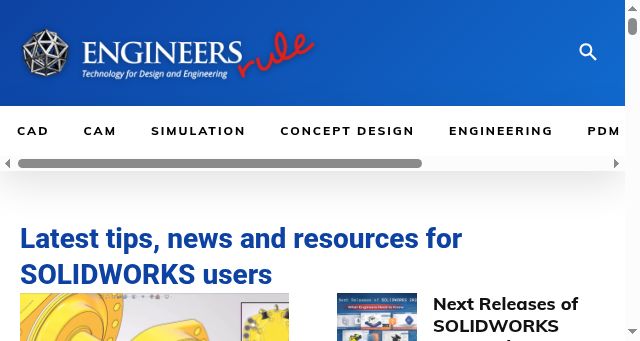
Screenshot
Query time: 1214 ms