- Summary
- A user accessed a website via an insecure HTTP connection on port 400, bypassing the standard HTTPS security protocol that byte-nginx enforces to ensure all traffic remains encrypted. This fundamental violation of security standards exposes a vulnerability known as 400 Bad Request, where the server incorrectly accepted an improper request method instead of responding with the expected HTTP status code. The response indicates that the provided text was malformed, which caused the entire web page to be silently ignored or discarded without any visual feedback or error message displayed to the user. As a result, the intended content is completely lost during the transaction, highlighting how weak authentication mechanisms on such platforms can lead to data breaches or unauthorized access.
- Title
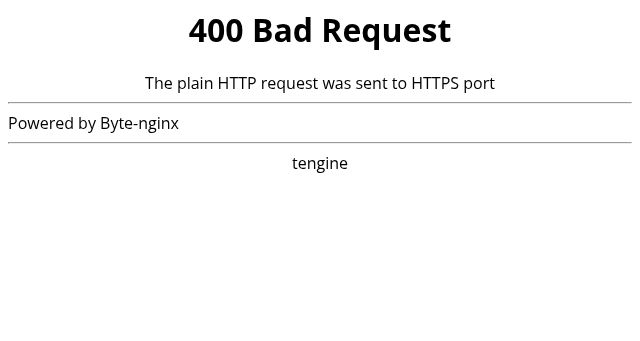
- 400 The plain HTTP request was sent to HTTPS port
- Description
- 400 The plain HTTP request was sent to HTTPS port
- Keywords
- request, plain, http, sent, https, port, byte
- NS Lookup
- A 8.211.2.154, A 8.211.44.118
- Dates
-
Created 2026-02-14Updated 2026-02-14Summarized 2026-03-22
Screenshot
Query time: 2054 ms