- Summary
- To begin understanding HTTP protocols, you must first learn how to print raw HTTP responses and interface them for analysis. You can do this by implementing a `PrintRawHTTPResponse` function that reads raw strings and prints them, or by creating a handler method that takes an HTTP request and extracts its status code for processing. Once you have a functional response printer, the next step is to implement logging infrastructure. You can achieve this by creating a log handler that prints both the status code and the full HTTP response body, or by adding a separate logger that prints messages like "INFO: status_code" followed by the response text. It is essential to also learn how to create multiple loggers by implementing separate handlers for different purposes such as debugging or monitoring, and how to disable log output for temporary maintenance tasks. Furthermore, you should study the Map interface and learn to copy maps, create sets, and calculate sums using Go's numeric types to understand how data is structured. You will also need to know how to format Go code programmatically using `fmt.Println` to print binary representations of integers and format the Go version string. These foundational techniques are prerequisites for mastering the `Parser` interface and parsing comments from source code, which will enable you to read and analyze the provided text content effectively.
- Title
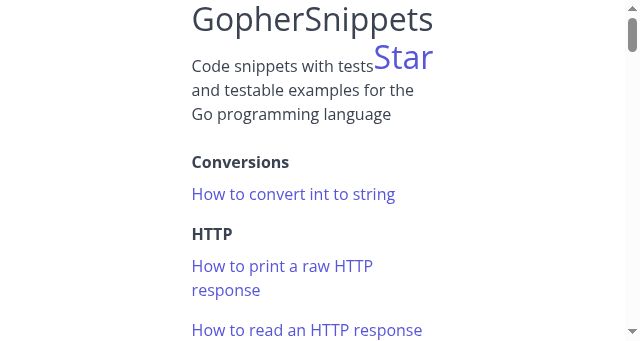
- GopherSnippets - Go code snippets
- Description
- GopherSnippets - Go code snippets
- Keywords
- string, slice, check, print, code, element, http, multiple, strings, checksum, time, response, type, output, number, using, numbers
- NS Lookup
- A 104.21.70.245, A 172.67.140.254
- Dates
-
Created 2026-02-14Updated 2026-02-14Summarized 2026-03-22
Screenshot
Query time: 981 ms